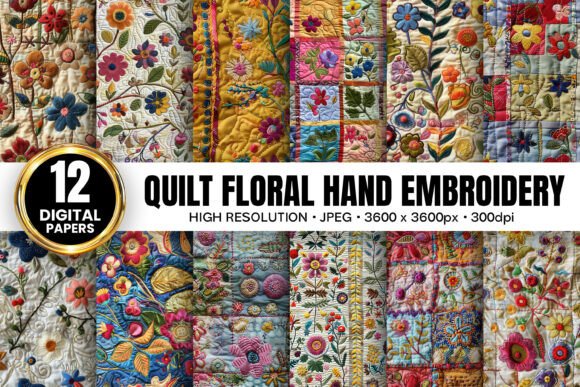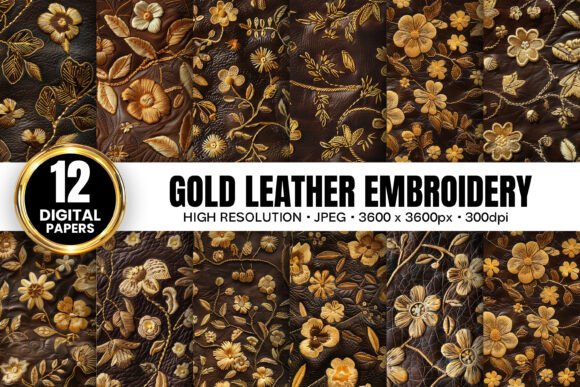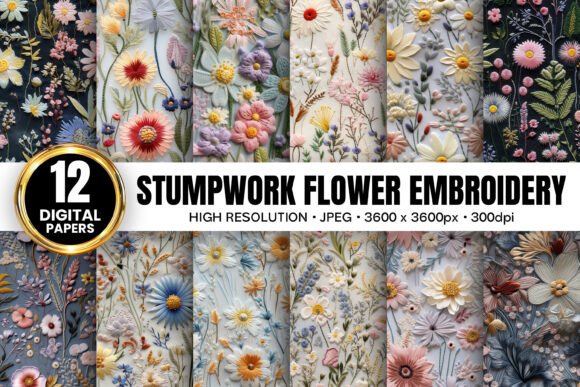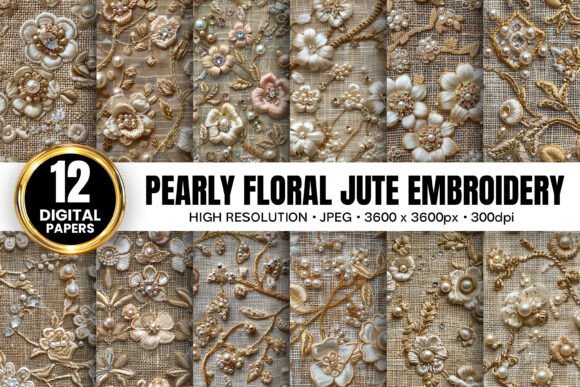
Crochet Knit Floral Embroidery Patterns Review
As an embroidery designer who has spent years digitizing logos and creating custom assets for small businesses, I approach every new design asset with a critical eye. It is not just about whether a graphic looks pretty on a screen; it is about how it translates into thread, how it withstands washing, and how it elevates a brand's identity. Recently, I reviewed the Crochet Knit Floral Embroidery Patterns collection to evaluate its potential for branded merchandise, specifically for boutique owners, cafes, and handmade product creators looking to add a unique touch to their small business merch.
First Impressions: A Handmade Aesthetic for Modern Brands
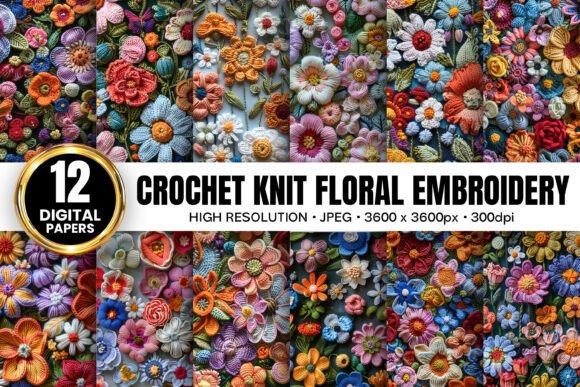
Upon opening the package, which includes 12 high-resolution digital papers in a single ZIP file, the immediate visual impact is one of warmth and authenticity. The title itself suggests a specific texture: the cozy, interlocking loops of crochet combined with organic floral motifs. For a brand identity that relies on feelings of comfort, artisanal quality, or rustic elegance, this aesthetic is gold. Unlike sharp, vector-based geometric logos, these Patterns evoke a sense of human touch.
The files are provided as JPGs at 3600 x 3600 pixels with 300 DPI. While these are technically Graphics rather than pre-digitized stitch files, the resolution is sufficient for high-quality tracing or use as a reference for manual digitizing. The "crochet knit" style implies a textured look that can be incredibly effective when translated into actual thread, provided the digitizer understands how to mimic that looped texture without creating excessive bulk.
Real-World Application for Small Business Merchandise
The true test of any design is its application in a real business scenario. Imagine a local bakery wanting to upgrade their staff uniforms or a florist looking for branded tote bags. Here is how Crochet Knit Floral Embroidery Patterns performs across various commercial embroidery projects:
- Embroidered Patches: This is arguably the strongest use case. The seamless nature of the patterns allows for circular or oval patches that can be sewn onto denim jackets, canvas aprons, or backpacks. The floral motif adds a softness that balances well with rugged fabrics.
- Custom Apparel and Uniforms: For a boutique hotel or a creative studio, placing these patterns as an all-over print background (via sublimation) or as a chest accent on work shirts creates a cohesive look. However, for direct embroidery, selecting a single floral element from the pattern works best to avoid overwhelming the garment.
- Tote Bag Design: Canvas totes are a staple for Etsy sellers and market vendors. A large-scale version of this pattern, digitized with lower stitch density to prevent puckering, makes for a stunning tote bag design that customers will actually want to carry.
- Cap Embroidery: Using a simplified version of the floral element on the side panel of a baseball cap offers a subtle branding opportunity. The curved surface of a cap requires careful attention to pull compensation, but the organic shapes here are forgiving.
- Apron Embroidery: For bakeries and craft studios, an apron featuring this pattern near the pocket or along the hem reinforces the "handmade" promise of the products being sold.
Technical Considerations and Potential Pitfalls
While the visual appeal is strong, moving from a 300 DPI JPG digital embroidery file reference to a physical finished product requires technical diligence. As a professional, I must highlight where caution is needed.
First, stitch density is a major concern. The "knit" texture implied in the design suggests overlapping lines. If a digitizer attempts to replicate every pixel of the source image literally, the result will be a stiff, cardboard-like patch that may break needles or distort the fabric. It is crucial to simplify the design, using satin stitches for outlines and fill stitches with appropriate underlay for the floral centers.
Second, consider the hoop size and placement. These patterns are seamless, meaning they can be tiled, but for embroidery, you are limited by your machine's hoop. Ensure the scale of the floral elements fits within standard hoop sizes (like 4x4 or 5x7 inches) if you intend to create repeatable motifs. Furthermore, on dark uniforms, the thread colors must have high contrast. The pastel or earthy tones often associated with crochet designs might get lost on navy or black fabrics unless a bright underlay or outline is used.
Finally, be wary of tiny details. If scaling this down for a small left-chest logo or a hat front, fine lines in the "crochet" texture may merge or disappear. Always test the design at the intended size before committing to a production run.
Elevating Brand Identity and Customer Trust
In today's market, consumers crave authenticity. Using Crochet Knit Floral Embroidery Patterns signals that a brand values craftsmanship. When a customer receives a product with a high-quality embroidered patch featuring these intricate florals, it increases the perceived value of the item. It transforms a standard promotional giveaway into a keepsake.
For brand identity, consistency is key. If your logo is modern and minimalist, these patterns might clash unless used as a secondary accent. However, for brands built around wellness, organic products, or artisanal goods, these graphics reinforce the core message. They tell a story of care and detail, which fosters customer trust and engagement.
Practical Notes for the Professional Designer
Before integrating these assets into your commercial workflow, follow these steps to ensure success:
- Test in Black and White: Print the JPG in grayscale first. This helps you see the contrast and determine if the details hold up without relying on color.
- Check Scalability: Verify if the design remains clear when resized for small patches versus large back drops.
- Review Thread Colors: Map out your thread chart early. Ensure you have the specific shades needed to capture the "knit" illusion.
- Inspect Spacing: Look closely at the 3600 x 3600 pixel file. Are the floral elements too close together? You may need to adjust spacing during digitizing to allow for fabric movement.
- Confirm Hoop Size: Match your digitized output to the physical capabilities of your embroidery machine.
- Test on Real Fabric: Never skip the sample stitch-out. Test on the exact fabric texture you plan to use, as knits and wovens react differently.
- Use Proper Stabilizer: Given the potential density of a "knit" look, a cut-away stabilizer is often safer than tear-away to prevent distortion over time.
- Create a Mockup: Generate a printable mockup for client approval before stitching the final run.
- Verify Licensing: Although the product description mentions commercial use implications, always confirm the specific license terms regarding resale of digitized files versus finished goods.
In conclusion, Crochet Knit Floral Embroidery Patterns offers a versatile and aesthetically pleasing foundation for small business branding. While it requires skilled digitizing to translate the high-resolution graphics into a durable machine embroidery design, the payoff is a unique, textured look that stands out in a sea of generic corporate logos. For the thoughtful designer willing to put in the technical work, these patterns are a valuable addition to any commercial library.