Pearly Jute Floral Embroidery Patterns Review
As a designer who spends more time staring at stitch simulations than I do sleeping, I approach new design assets with a healthy dose of skepticism. We have all been there: you download a beautiful digital embroidery file, only to find that the stitch density is a nightmare on textured fabric or the details vanish entirely once the needle hits the cloth. That is why I took a close look at the Pearly Jute Floral Embroidery Patterns collection before committing it to any client work or craft business inventory. This isn't just about pretty pictures; it is about how these graphics translate into a tangible, high-quality finished product.
First Impressions and Visual Personality
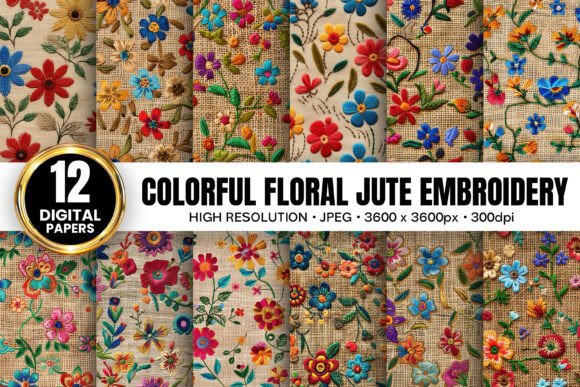
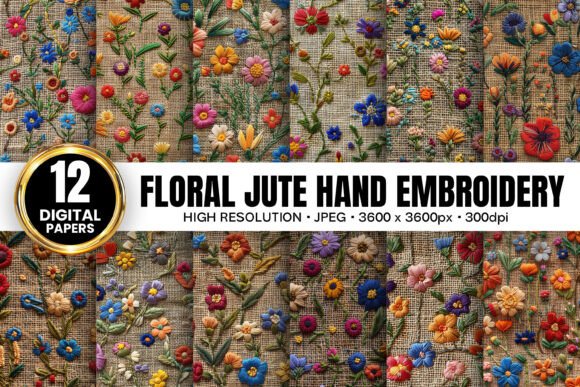
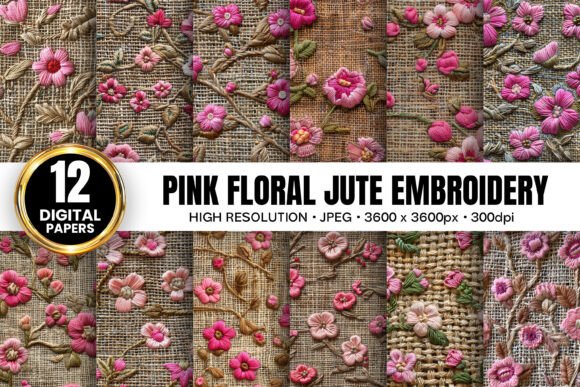
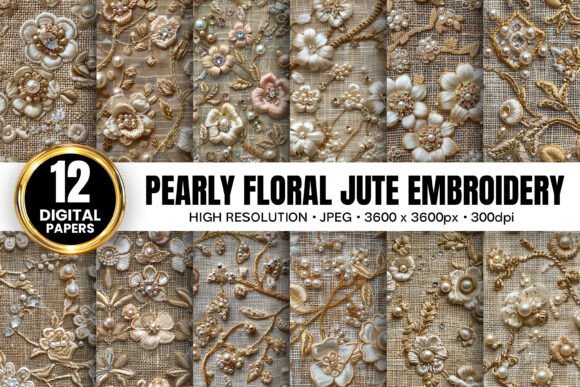
When I first opened the ZIP file containing the Pearly Jute Floral Embroidery Patterns, the immediate takeaway was the mood. The name suggests something organic, slightly rustic, yet refined. Visually, the collection delivers on this promise. The floral motifs feel grounded, avoiding the overly cartoonish or stiff look that plagues many mass-market libraries. For an Etsy seller or boutique owner, this visual personality is crucial. It speaks to a customer base that values handmade authenticity over factory perfection.
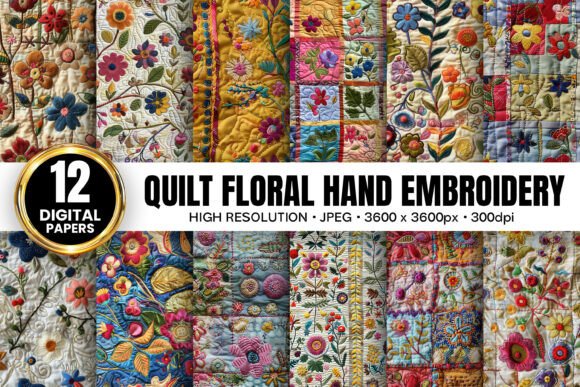
The layout of these patterns is seamless, which offers incredible versatility. Unlike a single centered motif, these Graphics can be tiled for all-over prints or cropped for specific focal points. The resolution is listed at 300 DPI with dimensions of 3600 x 3600 pixels, which is excellent for creating crisp printable mockups to show clients before you even thread the machine. However, as an embroiderer, my mind immediately jumps to translation. How does this "pearly jute" aesthetic hold up when converted from a pixel-based image to actual thread?
Real-World Application: The Tote Bag Test
To truly evaluate the Pearly Jute Floral Embroidery Patterns, I simulated a real-life scenario: a custom order for a local farmer's market vendor needing branded tote bag designs. The client wanted something earthy but elegant, suitable for carrying produce and artisanal goods. I selected one of the floral patterns from the set to serve as the basis for a large hoop design.
In this context, the pattern shines. The organic shapes of the florals mimic the natural irregularity of hand-stitching, which adds perceived value to the handmade product. When digitized correctly (or if used as a reference for free-motion work), the flow of the vines and petals creates a sense of movement across the canvas fabric. For a small shop product, this kind of detail signals quality. Customers are willing to pay a premium for items that look thoughtfully designed rather than slapped on with a generic transfer.
I also considered these patterns for sweatshirt embroidery. The softer, muted tones implied by the "jute" descriptor would pair beautifully with heather grey or oatmeal-colored fleece. In a holiday embroidery collection, these could serve as subtle background elements for a cozy winter line, providing texture without overwhelming the garment.
Navigating Fabric and Stitch Challenges
While the visual appeal is strong, practical application requires caution. The Pearly Jute Floral Embroidery Patterns are provided as high-resolution JPGs, not pre-digitized stitch files. This is a critical distinction. If you intend to use these as a direct machine embroidery design, you must digitize them first or use software to convert them. This gives you control over the stitch density, which is vital.
If you are planning to use these on textured fabrics like linen or heavy canvas, you need to ensure your digitizing uses sufficient underlay and perhaps a fill stitch rather than just running stitch outlines, which might get lost in the weave. Conversely, on thin, stretchy fabrics like baby onesies, the density must be reduced to prevent puckering. A dense floral pattern on a baby embroidery project can make the garment stiff and uncomfortable against sensitive skin.
Curved surfaces present another hurdle. If you are eyeing these for cap embroidery, remember that large, continuous floral runs can distort on the front panel of a hat. You may need to break the pattern into smaller segments or adjust the pull compensation in your digitizing software. Always test on scrap fabric first. I cannot stress this enough. What looks perfect on a 300 DPI screen might behave differently when 12 different thread colors interact with a specific material.
Commercial Viability and Brand Consistency
For commercial embroidery projects, consistency is king. One of the strengths of the Pearly Jute Floral Embroidery Patterns is the cohesive style across the 12 included papers. This allows a brand to maintain a consistent look across different products—a pillow cover here, a kitchen towel there—without the designs feeling disjointed. This level of coordination builds customer trust and strengthens brand recognition.
However, before listing these as part of your design assets for sale or using them in products for resale, you must verify the licensing terms provided with the download. The product description highlights the technical specs (JPG, 300 DPI), but it does not explicitly detail commercial rights for the stitched output versus the digital file itself. As a professional, I always advise checking whether the license covers unlimited physical goods or if there are restrictions on selling the digital patterns themselves.
Final Verdict for Designers and Makers
The Pearly Jute Floral Embroidery Patterns offer a sophisticated, nature-inspired aesthetic that fits well within the current trend of organic modernism. They are particularly well-suited for home decor items like pillow covers and tea towels, where the seamless nature of the pattern can be fully utilized. For apparel, they work best on stable fabrics where the intricacy of the floral details can be preserved through careful digitizing.
My advice to fellow makers is to treat these Patterns as a high-quality foundation rather than a plug-and-play solution. Use them to inspire your applique design layouts or as a guide for your own satin stitch work. Check the contrast of your thread choices against your fabric; a low-contrast palette might look chic in a mockup but invisible from three feet away. By respecting the technical limitations of embroidery while leveraging the artistic strength of these graphics, you can create personalized gifts and retail items that stand out in a crowded market.
Ultimately, the value of this collection lies in its versatility and mood. It provides a fresh alternative to the standard, overly bright floral clips we see everywhere. With the right preparation and attention to hoop size and stabilizer selection, the Pearly Jute Floral Embroidery Patterns can elevate a simple embroidery project into a piece of art that customers are eager to own.