Review: Cactus Embroidery Seamless Digital Paper for Makers
As a designer who spends more time staring at stitch simulations than I do sleeping, I approach every new digital embroidery file with a healthy dose of skepticism. We have all been there: you buy a design that looks vibrant on the screen, only to find it turns into a bird's nest of thread breaks and puckering once it hits the hoop. That is why I took a close look at the Cactus Embroidery Seamless Digital Paper. While the title suggests a flat graphic asset, my interest lies in how this specific aesthetic translates from a Backgrounds category item into a tangible, stitched reality for real-world projects.
The First Impression: Mood and Visual Personality
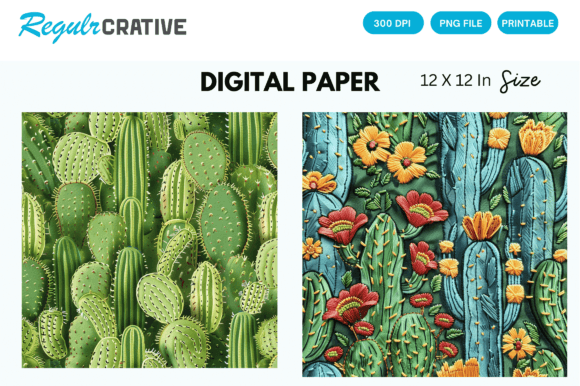
When I first opened the preview for the Cactus Embroidery Seamless Digital Paper, the immediate vibe was one of relaxed, desert-inspired warmth. Unlike some overly cartoonish succulent designs that feel cheap, this collection carries a sophisticated, hand-drawn quality. The layout feels organic, avoiding the rigid repetition that often plagues seamless patterns. For an embroidery project, this is crucial. A design that feels too "computer-generated" often lacks the soul we look for in a handmade product.
The visual personality here leans heavily into the boho-chic and modern farmhouse trends that are currently dominating boutique shops. The shapes are distinct enough to be recognizable even when scaled down, which is a promising sign for versatility. Whether you are aiming for a subtle texture on a large item or a focal point on a smaller good, the theme suggests a natural fit for home decor and casual apparel. It creates a mood of calm and resilience, perfect for customers looking for gifts that feel personal and grounded.
Real-World Application: From Screen to Stitch
To truly evaluate this asset, I imagined a specific scenario: a local boutique owner preparing a summer collection of custom tote bags and linen aprons. In this context, the Cactus Embroidery Seamless Digital Paper shines as a potential fill pattern or a border accent. Imagine a natural canvas tote bag design where the cactus motif runs along the bottom hem. Because the pattern is seamless, it allows for continuous stitching without awkward breaks, giving the finished product a high-end, manufactured look while retaining the charm of being handmade.
I also see immense potential for sweatshirt embroidery. A crewneck in sage green or terracotta featuring a clustered version of this cactus theme on the sleeve or chest would appeal directly to the current market for cozy, nature-inspired custom apparel. For Etsy sellers, this kind of design adds perceived value. It moves beyond a simple logo slap and offers a textured narrative that customers love to photograph and share on social media. If you are creating printable mockup files to sell as design assets, this graphic provides an excellent base to demonstrate how digital patterns can mimic physical stitching.
Navigating Fabric Textures and Hoop Limitations
However, practical application requires us to talk about limitations. Not every fabric plays nice with every design. When working with the Cactus Embroidery Seamless Digital Paper concept on textured fabrics like waffle knit or heavy denim, you must consider how the stitch density interacts with the material. If the original graphic implies dense fill stitch areas, running this on a stretchy jersey knit for baby embroidery could lead to distortion. In those cases, I would recommend simplifying the interior fills to open running stitch outlines or using a cut-away stabilizer to maintain integrity.
Curved surfaces present another challenge. If you plan to adapt this seamless pattern for a cap or a structured hat, remember that standard flat embroidery machines struggle with curvature unless the design is specifically digitized for it. Trying to force a wide, seamless background pattern onto a small, curved front panel of a baseball cap is a recipe for registration errors. For hats, I suggest isolating a single cactus element from the pattern rather than attempting the full seamless flow. Similarly, pay attention to hoop size. If your machine has a small field, you may need to break the seamless pattern into multiple hooping sequences, which requires precise marking to ensure the pattern aligns perfectly between jumps.
Enhancing Brand Value and Customer Trust
Why does the choice of a specific pattern matter so much? It comes down to brand consistency and professionalism. Using a cohesive theme like the Cactus Embroidery Seamless Digital Paper across your small shop product line creates a recognizable visual language. When a customer buys a pillow cover today and a kitchen towel next month, seeing that same high-quality cactus motif builds trust. It tells them you care about the details. This attention to detail directly impacts buyer engagement; people are willing to pay a premium for items that look thoughtfully designed rather than mass-produced.
For commercial embroidery projects, clarity is king. If the design includes tiny details that get lost when stitched out with standard 40-weight thread, the final result will look muddy. Before committing to a large run of holiday embroidery gifts or wedding favors, always test the design. Check how the thread colors contrast against your chosen fabric. A dark green cactus on a navy blue shirt might look great on a monitor but disappear entirely in real life. I always advise running a test on scrap fabric of the exact same weight and weave as your final material.
Designer Notes for Success
If you decide to incorporate this style into your workflow, keep these practical tips in mind:
- Test First: Never skip the scrap fabric test. Check for puckering, especially if using satin stitch borders.
- Check Licensing: Since this is categorized under Graphics and Backgrounds, verify if the license allows for physical resale of stitched items or if it is restricted to digital use only.
- Stabilizer Matters: For seamless patterns covering large areas, a mesh stabilizer can help prevent the fabric from pulling inward.
- Color Contrast: View your design in black and white to ensure the values separate clearly; this predicts how readable the stitches will be from a distance.
- File Formats: Confirm the file type matches your machine. If the product is a raster image meant for printing, you may need to have it professionally digitized into an embroidery file format like PES or DST before stitching.
In conclusion, the Cactus Embroidery Seamless Digital Paper offers a compelling aesthetic for makers who understand how to adapt digital concepts into physical stitches. It is not just a background; it is a springboard for creativity. Whether you are crafting a personalized gift for a friend or building inventory for a bustling craft business, this design holds the potential to elevate your work. Just remember that the magic happens not in the download, but in the thoughtful execution of the stitch. Treat the design with respect, understand your materials, and you will create something truly special.