Reviewing Needle Felt Rainbow Embroidery Patterns for Boutique Sweatshirts
As an embroidery designer who spends most of my days digitizing logos and testing stitch-outs for small clothing brands, I am always on the hunt for assets that bridge the gap between digital art and tangible texture. Recently, I evaluated the Needle Felt Rainbow Embroidery Patterns collection with a specific project in mind: a limited-edition drop of premium sweatshirts for a boutique brand specializing in cozy, whimsical apparel. When you are running a small shop product line, every design element must justify its place on the garment. This review breaks down how these graphics translate from a digital file to a finished product on heavy cotton blends.
First Impressions: Mood and Aesthetic Potential
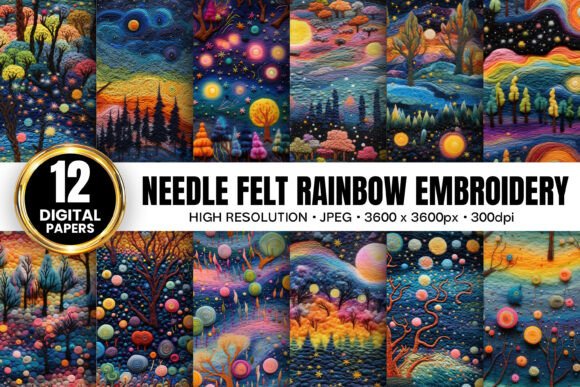
Upon opening the ZIP file, the first thing that strikes me about the Needle Felt Rainbow Embroidery Patterns is the inherent warmth of the visual style. The term "needle felt" suggests a soft, fibrous texture, which is incredibly appealing for seasonal apparel. Unlike sharp, vector-based gradients, these patterns imply a depth and fuzziness that mimics the look of high-density stitching or actual felting. For a boutique brand aiming for a handmade product feel, this aesthetic is gold. It reads as rustic yet playful, striking a balance that appeals to customers looking for something unique rather than mass-produced.
The color palette, naturally leaning into rainbow spectrums, offers versatility. On neutral sweatshirts like oatmeal, heather grey, or cream, these patterns would pop with a cheerful vibrancy without looking childish. Conversely, on dark fabric such as navy or charcoal, the rainbow hues would provide a striking contrast, creating a bold statement piece. The mood is undeniably cute and decorative, perfect for oversized hoodies where the chest area serves as a canvas for artistic expression.
Adapting Digital Graphics for Sweatshirt Embroidery
It is crucial to address the nature of the files provided. The product description specifies that you receive 12 high-resolution digital papers in JPG format at 300 DPI. As a professional, I must clarify that these are graphics, not pre-digitized machine embroidery design files (like PES or DST). However, this does not diminish their value; rather, it opens up creative avenues for custom apparel.
For a sweatshirt embroidery project, these images serve as exceptional references for manual digitizing. If you have access to embroidery software, you can import these JPGs to trace the organic shapes of the rainbow arcs. The 3600 x 3600 pixel resolution ensures that when you zoom in to define your stitch paths, the edges remain crisp. This allows you to control the stitch density specifically for the fabric texture of a sweatshirt. Heavy fleece requires a different approach than lightweight cotton; by using these patterns as a base, you can reduce density to prevent puckering while maintaining the soft "felted" look through the use of textured fill stitches.
Alternatively, for shops that utilize direct-to-film transfers or sublimation underlays, these 300 DPI files are ready for immediate production. They function beautifully as printable mockups for your Etsy listings before you even stitch a single thread, helping you gauge buyer trust and visual recognition.
Placement Strategies for Hoodies and Crewnecks
When planning the layout for a hoodie design, placement is everything. The seamless nature of these patterns makes them ideal for all-over prints or large back designs. Imagine a gradient rainbow arching across the shoulders of an oversized hoodie; the seamless capability means you can tile the image without visible breaks, creating a continuous flow of color.
- Chest Placement: A cropped version of the pattern works well on the left chest for a subtle, minimalist branding approach.
- Sleeve Accents: Strips of the rainbow pattern can be used as sleeve stripes, adding a sporty yet artisanal touch.
- Back Designs: The full resolution allows for large-scale artwork on the back, turning a simple sweatshirt into a statement piece suitable for lifestyle product photography.
Technical Considerations for Commercial Use
Before committing to a production run, there are practical designer concerns to address. Since we are dealing with a simulation of needle felting via embroidery or print, thread colors are critical. To achieve the desired effect, I recommend using variegated threads or blending multiple shades of the same hue to mimic the fibrous depth seen in the source images. If you are digitizing these yourself, pay close attention to the underlay. A sturdy underlay is essential on thick sweatshirt fabric to ensure the top stitches sit evenly and do not sink into the pile.
Stabilizer choice is another non-negotiable factor. For commercial embroidery on knit fabrics, a cut-away stabilizer is usually preferred over tear-away to maintain the integrity of the design after multiple washes. Given that these patterns are intended for a boutique brand, durability is key to maintaining customer engagement and brand reputation. You must ensure the finished product withstands the rigors of daily wear.
One limitation to note is small-size readability. Because the "needle felt" style relies on soft transitions and texture, shrinking these patterns down to a tiny logo size might result in a loss of detail. These graphics shine best when given space to breathe. Always test a stitch-out on your specific fabric blend before finalizing the hoop size and placement for the full run. Remember, the product details do not specify exact stitch counts or recommended hoop sizes, so prototyping is essential.
Elevating Brand Identity and Product Value
In the crowded market of Etsy sellers and handmade business owners, distinctiveness drives sales. Utilizing the Needle Felt Rainbow Embroidery Patterns can significantly affect product value. The unique texture implied by the design suggests a higher level of craftsmanship, allowing you to price your items at a premium compared to standard printed tees. It signals to the customer that this is a thoughtful, curated item.
Furthermore, consistent use of these design assets across your collection builds strong brand identity. If your boutique is known for colorful, tactile, and joyful clothing, these patterns reinforce that narrative visually. They encourage customer engagement on social media, as the photogenic quality of the rainbow textures invites users to share photos of their new purchases.
Final Verdict for Creative Entrepreneurs
The Needle Felt Rainbow Embroidery Patterns collection is a robust resource for anyone looking to add a splash of color and texture to their apparel line. While they require an extra step of digitizing if your goal is pure embroidery, the high-resolution JPG format provides a flawless foundation for creating custom embroidery files. The seamless capability and 300 DPI quality make them versatile for various applications, from full-back hoodie art to subtle pocket details.
For small clothing brands and apparel decorators, these graphics offer a way to produce commercial embroidery that feels personal and handmade. Just remember to verify the technical specifics regarding fabric compatibility and stabilization during your sampling phase. With the right execution, these patterns can transform a basic sweatshirt into a coveted piece of wearable art, strengthening your position as a creative entrepreneur in the fashion space.