Reviewing Victorian Embroidery Seamless Patterns for Craft Fairs
As an embroidery designer who has spent countless weekends setting up booth displays at local craft fairs and handmade markets, I know that the difference between a browsing customer and a buyer often comes down to visual impact. When I recently evaluated the Victorian Embroidery Seamless Patterns for potential inclusion in my upcoming product line, I approached it with a critical eye focused on production reality and sales potential. This isn't just about pretty pictures; it is about how a digital embroidery file translates into a tangible handmade product that people want to take home.
First Impressions: Elegance Meets Marketability
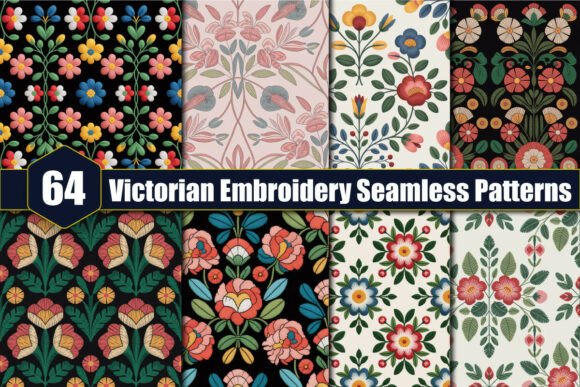
The moment you load the Victorian Embroidery Seamless Patterns, the aesthetic is unmistakable. These graphics exude a sense of timeless elegance, blending intricate floral motifs with the structured sophistication typical of the Victorian era. Unlike some modern designs that rely on bold, blocky shapes, these patterns feel decorative, premium, and soft. For a craft fair product, this mood is incredibly valuable. It appeals to customers looking for something that feels curated and high-end rather than mass-produced. The seamless nature of the design suggests versatility, allowing us to imagine it covering large surfaces or acting as a refined border.
Since the product description specifies that you receive a JPG Format at 300 dpi with dimensions of 12″ x 12″ inches (3600 x 3600 px), it is crucial to understand that this is a graphic asset, not a pre-digitized stitch file. As a professional, my first thought is how to convert this high-resolution image into a viable machine embroidery design. The clarity of the source image is excellent, which gives me confidence that the digitizing process will yield clean results without losing the delicate details that define the Victorian style.
Product Applications for the Weekend Booth
When planning my table display, I visualize exactly where these patterns will shine. The scale of the Victorian Embroidery Seamless Patterns makes them ideal for several key items:
- Tote Bags and Market Bags: A large-scale application of this pattern on a canvas tote creates an instant statement piece. The seamless capability means I can tile the design to cover the entire front panel, creating a custom fabric look that elevates a simple bag into a boutique item.
- Aprons and Tea Towels: For kitchen linens, the elegance of the Victorian motif adds a touch of farmhouse chic. Using the pattern as a wide border along the bottom of an apron or across the hem of a tea towel looks sophisticated and sells well as a small shop product.
- Pillow Covers: Home decor is a huge category at craft fairs. Applying this pattern to throw pillow covers allows the intricate details to be appreciated up close, encouraging customers to touch and feel the texture of the stitching.
- Embroidered Patches: By isolating specific elements from the seamless repeat, I can create smaller embroidered patch designs. These are low-cost impulse buys that add variety to the booth without requiring large amounts of thread or time.
For the Etsy seller or digital creator, these graphics also serve as excellent bases for printable mockup listings. Before even stitching a single thread, you can create realistic images of your finished product to gauge customer interest online.
Production Realities and Practical Selling Points
Turning a graphic into a sellable item requires careful consideration of production logistics. One of the strongest selling points of the Victorian Embroidery Seamless Patterns is their repeatability. Because the design tiles seamlessly, it is perfect for batch production. Once I have digitized the repeat and tested the stitch settings, I can run multiple hoops of fabric continuously, maximizing efficiency during prep week before a market.
However, the visual appeal relies heavily on execution. The intricate lines typical of Victorian art can become muddy if the stitch density is too high. When digitizing this JPG, I would recommend using a mix of satin stitches for outlines and lighter fill stitches for the floral centers to maintain definition. It is vital to check thread colors against the fabric; high contrast works well for a bold look, but tonal threading (e.g., cream thread on ivory fabric) enhances the premium, subtle vibe that many boutique shoppers prefer.
Photography is another critical factor. These patterns photograph beautifully because the detailed textures catch the light, adding depth to online listings. Whether you are an Etsy seller or promoting your booth on social media, the complexity of the design provides plenty of visual interest that stops the scroll.
Critical Considerations for Successful Execution
While the potential is high, there are pitfalls to avoid when working with such detailed graphics. Since the source is a raster image (JPG), you must ensure your digitizing software interprets the edges cleanly. Here are specific areas where caution is needed:
- Fabric Texture: Avoid using this design on highly textured towels or thick, nubby fabrics. The fine details of the Victorian motif may get lost or distort on uneven surfaces. Smooth cotton, linen, or canvas yields the best results.
- Curved Surfaces: Be cautious when applying large sections of this pattern to curved cap surfaces. The distortion can break the seamless illusion and make the design look warped. It is better suited for flat items like patches or tote panels.
- Density and Pull: Dense stitch areas can cause fabric puckering, especially on lighter materials. Always use the right stabilizer—a cut-away stabilizer is often safer for detailed designs to prevent shifting over time.
- Scaling: While the image can be resized, shrinking the design too much for small accents may cause tiny details to merge. Test different sizes on scrap fabric to find the sweet spot where clarity is maintained.
Designer Notes for Maximum Impact
To truly leverage the value of Victorian Embroidery Seamless Patterns, I always follow a strict testing protocol. First, I test the digitized version on scrap fabric that matches my final product material. This confirms the hoop size requirements and ensures the machine handles the transitions smoothly. I also compare different fabric colors; sometimes a dark fabric with light thread creates a striking contrast that sells faster than the traditional white-on-white look.
Furthermore, brand consistency is key. If your booth features rustic items, these patterns might need to be paired with earthy thread tones. If your brand is more romantic and soft, pastels will enhance the Victorian feel. Finally, since this is a digital download only intended for commercial use in finished goods, always confirm the specific licensing terms regarding the resale of the digitized files versus the physical embroidered items. Most graphic licenses allow you to sell the finished product but restrict reselling the digital file itself.
In conclusion, the Victorian Embroidery Seamless Patterns offer a robust foundation for creating high-value handmade products. With careful digitizing, attention to fabric choice, and strategic placement on popular items like tote bags and home decor, these graphics can become the standout stars of your next craft fair booth, driving both customer engagement and sales.